
After Release to SCDPPPS
SCDPPPS becomes relevant when the question changes from whether jail or prison custody ended to whether a person is under correctional supervision in the community. A person supervised by the agency has generally left the jail or prison named in the release record, unless a separate detention has occurred. The person may still have lawful conditions involving reporting, travel, treatment, restitution, searches, residence, or other terms set by a court, statute, or parole authority.
The source of release remains important. SCDC documents a state-prison release event and sentence computation. A county detention center records a local jail release or transfer. SCDPPPS records the later supervision category and office. A short Saluda County jail stay may end with no SCDPPPS record at all. Conversely, a person can leave SCDC and enter parole or mandatory community supervision without completing every part of the sentence.
SCDPPPS supervision confirms a community correctional status, not the exact time a jail or prison physically released the person.
Confirm Saluda Supervision Status
Begin with a stable identifier. An SCDC number links a state-prison record to hearing and supervision material, while a court case and sentencing order can establish probation. Names alone can produce false matches. Ask only for public status and routing; detailed case-management information may not be public.
- Identify whether the last record involves a county sentence, an SCDC term, or a direct court order of probation.
- For state supervision, check the SCDPPPS offender search using the best available identity information.
- Compare the displayed category with the court order, SCDC release event, or parole hearing result.
- Contact the Saluda County SCDPPPS office for its current public-verification procedure and correct supervising-office route.
- If parole is involved, confirm that a favorable Board result was implemented through the later SCDC release record.
- When the record is missing or dated, request the existing public record from the agency or court instead of inferring status.
A complete release-first check therefore uses two layers. The jail or SCDC record establishes the custody endpoint. The SCDPPPS record establishes the kind of community supervision that follows. The Saluda County release search and record path helps identify the correct first custodian when that history is unclear.
Read SCDPPPS Supervision Types
Do not flatten every SCDPPPS result into parole. Each category has a different source and legal meaning. The displayed label should be copied as written and checked against the court, Board, or state-prison record that created it.
| Status | What It Means | Starting Record |
|---|---|---|
| Parole | Conditional community service of an eligible prison sentence after Board authorization. | Board outcome plus later SCDC release event. |
| Probation | A court-ordered community sentence or a condition tied to a suspended term. | Sentencing order and SCDPPPS record. |
| Community supervision | A statutory post-release period that can follow a no-parole offense under South Carolina law. | SCDC release type and SCDPPPS status. |
| Supervised reentry | A separately named transition category managed under its governing authority. | Agency record using that exact label. |
| Supervised furlough | A distinct supervised status that should not be relabeled as ordinary parole. | SCDPPPS and underlying authorization. |
| Tracking category | A program-specific status, including a category identified by the local directory as Jessie's Law tracking. | SCDPPPS public record and office verification. |
Community supervision under Section 24-21-560 is not ordinary parole. Parole depends on Board authority and eligibility, while probation comes from a court. If several records differ, the newest verified agency record and the underlying order should control the interpretation.
Note: Use the agency's exact category because parole, probation, and statutory community supervision arise from different legal records.
Saluda SCDPPPS Office
Saluda County has a named local office rather than only a statewide switchboard. Its official directory entry separates the local caseload into probation, parole, community supervision, supervised reentry, tracking, and furlough categories. Those counts change and must be tied to their capture date if quoted. They are not a name search, but they show the range of supervision work routed through the Saluda office.
Saluda County SCDPPPS
100 East Church Street
Saluda, SC 29138
Phone: 864-445-2080
Fax: 864-445-7103
Agent in Charge at research capture: Lindsey Koon
Confirm staff names, reporting instructions, appointment procedures, and office access directly. The source reviewed did not publish check-in directions. The office is the local routing point for a current Saluda supervision question, not a location where a person is detained or released from custody.
SCDPPPS Lookup Timing Limits
The statewide SCDPPPS person lookup expressly represents the previous day. That lag matters when a status has just begun, changed offices, or ended. A result may also omit someone whose supervision has already closed. An empty search cannot, by itself, establish that the person was never supervised or has no current legal obligations.
Use the local Saluda office as the same-day agency fallback. Supply the SCDC number, full name, relevant court case, and the category shown in the release or sentencing record. Ask for the public current status and correct office, not private notes or the details of confidential case management. If the question concerns the precise date prison custody ended, return to SCDC rather than treating an SCDPPPS result as a substitute release certificate.
Note: A previous-day lookup is a useful lead, but the local office is the stronger route for a newly changed Saluda supervision status.
Parole Records Before Supervision
The South Carolina Board of Paroles and Pardons makes parole decisions, while SCDPPPS supports the hearing and later supervision process. Its hearing search accepts combinations that include first and last name, SCDC number, and hearing month. Schedules are generally finalized and searchable about 30 days before the hearing, but dates can move and result posting can lag. Preserve the exact outcome language displayed by the agency.
The official parole hearing and result search provides the person-level route for an SCDC case.
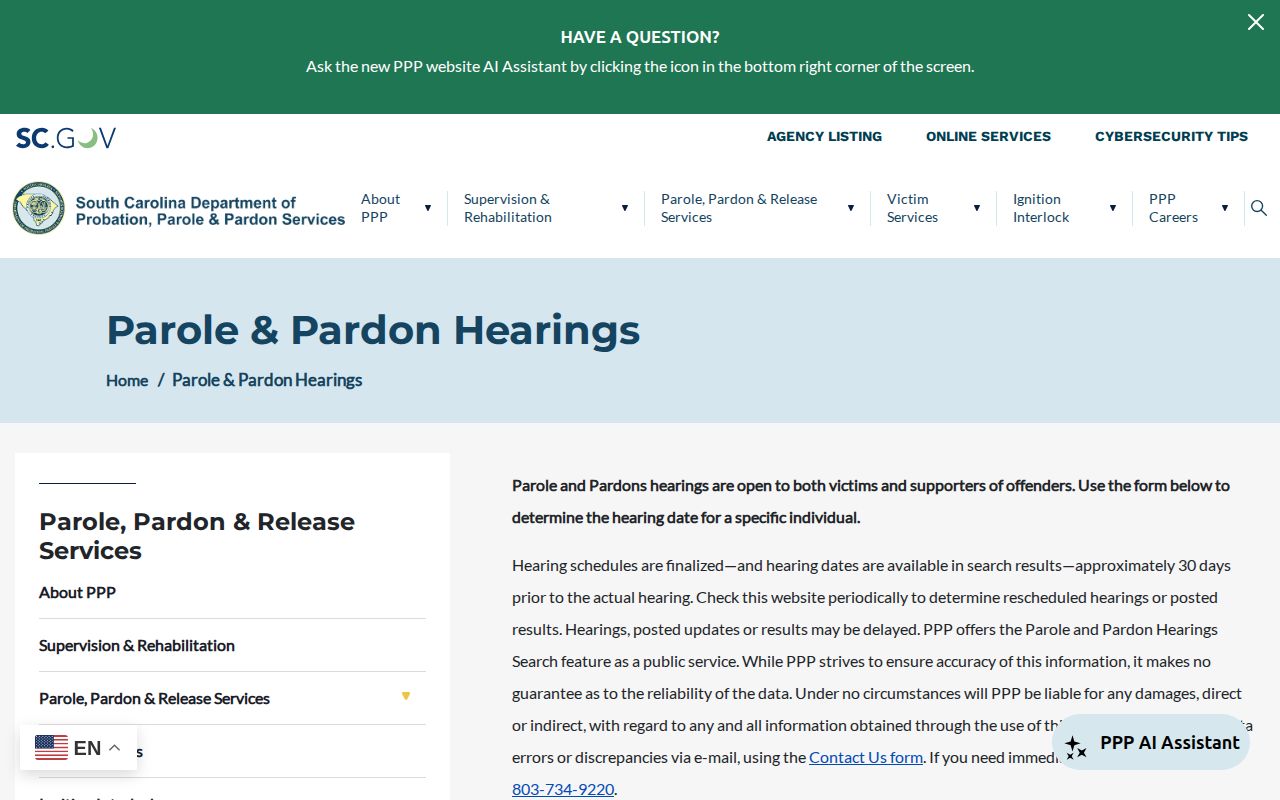
A result can show that parole was granted, denied, deferred, continued, rescinded, or otherwise acted upon only when that wording appears in the record. A grant authorizes a path but does not establish the physical release date.
The Board page and current calendar establish the broader hearing schedule.
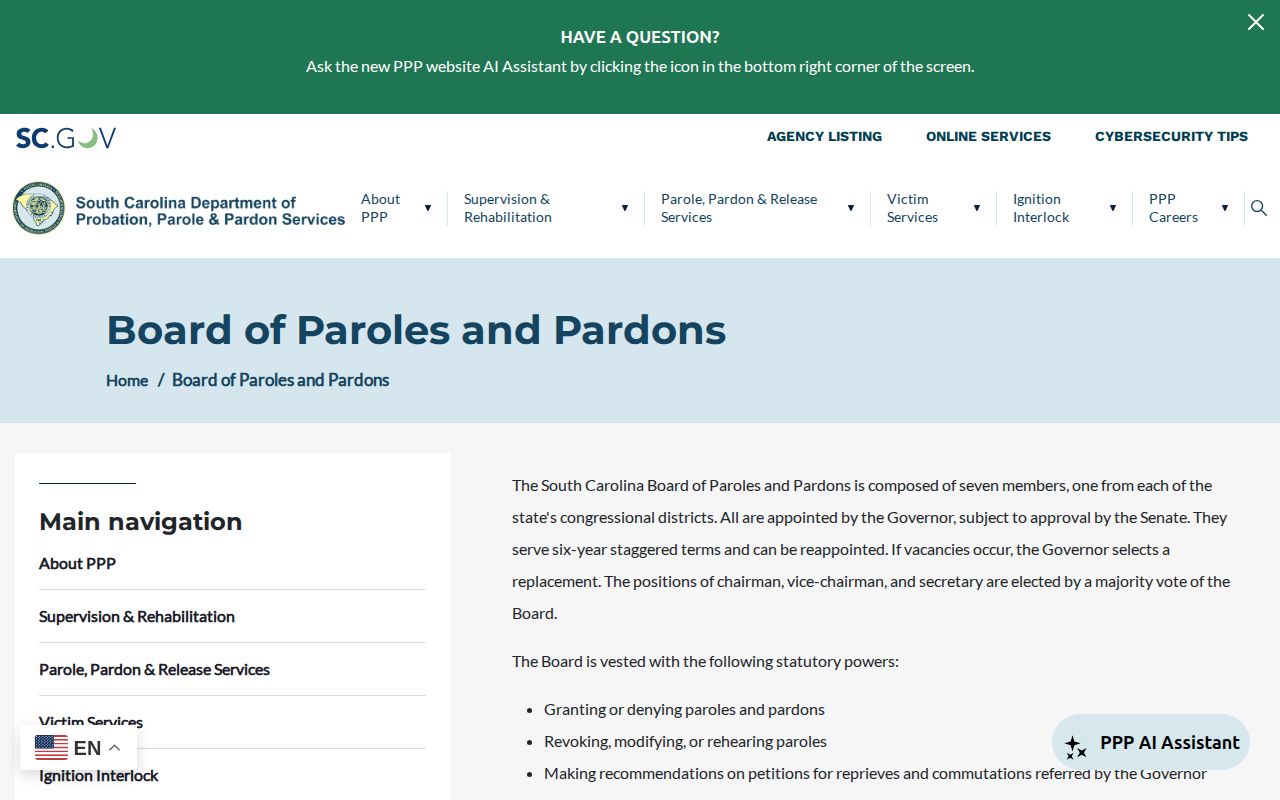
The annual calendar shows cadence, while the individual result supplies the case outcome. Confirm an implemented release in SCDC or VINE and then verify active community supervision with SCDPPPS.
Note: A granted hearing result is not the release timestamp and may still require planning, conditions, and final implementation.
SCDPPPS Absconder and Warrant Status
An absconder is a person alleged to have stopped maintaining required contact or otherwise failed to comply with supervision. It is a supervision status, not a synonym for release without conditions. It can lead to a warrant, arrest, or revocation process, but the status must come from an agency or court record.
No public Saluda County Sheriff absconder or warrant list was located in the official sources reviewed. Do not infer a warrant from an old address, missed appointment, stale web result, or rumor. Check applicable SCDPPPS public information and the court docket. For an urgent safety matter, use the proper law-enforcement channel; the supervision office is not an emergency dispatch center.
Revocation can return a person to custody, and a later arrest can coexist with an older supervision entry. The newest court, jail, SCDC, and SCDPPPS records should be reconciled before describing the person's current status.
Recover Mail After Saluda Release
Saluda County documents an unusual post-release process for digital scans of inmate mail. A former detainee may request those scans from the assistant jail administrator. The request must identify the Saluda County Detention Center, the former inmate's name and inmate ID, and the email address that should receive the files. After verification, the facility sends a download link.
The county's official inmate-mail policy is the source for this procedure, while the detention-center page supplies the current facility contact. The research identified Assistant Jail Administrator Lorine Kelly at l.kelly@saludacounty.sc.gov. Confirm the current contact before sending personal identifiers because staff assignments can change.
This mail-recovery process belongs to the detention center, not SCDPPPS. It does not prove a legal release or supervision status. It is a practical after-release document route that may matter while the former detainee separately checks court, custody, or supervision records.
Confirm SCDPPPS Discharge
Release from incarceration and discharge from supervision are separate events. A person may leave SCDC on parole or community supervision and remain subject to conditions. Probation may follow a county sentence or a suspended prison term. The supervision endpoint should come from the court or SCDPPPS record, not from adding a term to a date found online.
Ask for an existing public discharge, closure, or status record using the full name, SCDC number, case number, and displayed supervision category. A person absent from the previous-day search may have completed supervision, but the omission can also have another cause. The Saluda office can explain its public verification route. For the separate state-prison endpoint, compare the SCDPPPS record with the South Carolina Department of Corrections release record.
Parole may end by discharge or be interrupted by revocation. Probation termination comes through its governing court and agency process. Use the official label and date from the source rather than describing every closed status as a completed parole.